 A healthy diet is one that helps maintain or improve health. It is important for lowering many chronic health risks, such as obesity, heart disease, diabetes, hypertension and cancer. A healthy diet involves consuming appropriate amounts of all essential nutrients and an adequate amount of water. Nutrients can be obtained from many different foods, so there are numerous diets that may be considered healthy. A healthy diet needs to have a balance of macronutrients (fats, proteins, and carbohydrates), calories to support energy needs, and micronutrients to meet the needs for human nutrition without inducing toxicity or excessive weight gain from consuming excessive amounts.
Saturday, August 6, 2011
Healthy Diets
A healthy diet is one that helps maintain or improve health. It is important for lowering many chronic health risks, such as obesity, heart disease, diabetes, hypertension and cancer. A healthy diet involves consuming appropriate amounts of all essential nutrients and an adequate amount of water. Nutrients can be obtained from many different foods, so there are numerous diets that may be considered healthy. A healthy diet needs to have a balance of macronutrients (fats, proteins, and carbohydrates), calories to support energy needs, and micronutrients to meet the needs for human nutrition without inducing toxicity or excessive weight gain from consuming excessive amounts.
Health Self care strategies
Personal health also depends partially on the social structure of a person's life. The maintenance of strong social relationships, volunteering, and other social activities have been linked to positive mental health and even increased longevity. One American study among seniors over age 70 found that frequent volunteering was associated with reduced risk of dying compared with older persons who did not volunteer, regardless of physical health status. Another study from Singapore reported that volunteering retirees had significantly better cognitive performance scores, fewer depressive symptoms, and better mental well-being and life satisfaction than non-volunteering retirees.
Prolonged psychological stress may negatively impact health, and has been cited as a factor in cognitive impairment with aging, depressive illness, and expression of disease. Stress management is the application of methods to either reduce stress or increase tolerance to stress. Relaxation techniques are physical methods used to relieve stress. Psychological methods include cognitive therapy, meditation, and positive thinking which work by reducing response to stress. Improving relevant skills, such as problem solving and time management skills, reduces uncertainty and builds confidence, which also reduces the reaction to stress-causing situations where those skills are applicable
Health exact definition
 Health is the level of functional and (or) metabolic efficiency of a living being. In humans, it is the general condition of a person in mind, body and spirit, usually meaning to being free from illness, injury or pain (as in “good health” or “healthy”).
The World Health Organization (WHO) defined health in its broader sense in 1946 as "a state of complete physical, mental, and social well-being and not merely the absence of disease or infirmity." Although this definition has been subject to controversy, in particular as having a lack of operational value and the problem created by use of the word "complete", it remains the most enduring. Classification systems such as the WHO Family of International Classifications, including the International Classification of Functioning, Disability and Health (ICF) and the International Classification of Diseases (ICD), are commonly used to define and measure the components of health.
The maintenance and promotion of health is achieved through different combination of physical, mental, and social well-being, together sometimes referred to as the “health triangle”.The WHO's 1986 Ottawa Charter for Health Promotion furthered that health is not just a state, but also "a resource for everyday life, not the objective of living. Health is a positive concept emphasizing social and personal resources, as well as physical capacities."
Systematic activities to prevent or cure health problems and promote good health in humans are delivered by health care providers. Applications with regard to animal health are covered by the veterinary sciences. The term "healthy" is also widely used in the context of many types of non-living organizations and their impacts for the benefit of humans, such as in the sense of healthy communities, healthy cities or healthy environments. In addition to health care interventions and a person's surroundings, a number of other factors are known to influence the health status of individuals, including their background, lifestyle, and economic and social conditions; these are referred to as "determinants of health".
Natural tips for removing Acne with no side effects
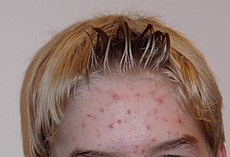
Acne occurs most commonly during adolescence, and often continues into adulthood. In adolescence, acne is usually caused by an increase in testosterone, which people of both genders accrue during puberty. For most people, acne diminishes over time and tends to disappear — or at the very least decrease — after one reaches one's early twenties. There is, however, no way to predict how long it will take to disappear entirely, and some individuals will carry this condition well into their thirties, forties, and beyond.
Some of the large nodules were previously called "cysts" and the term nodulocystic has been used to describe severe cases of inflammatory acne. The "cysts," or boils that accompany cystic acne, can appear on the buttocks, groin, and armpit area, and anywhere else where sweat collects in hair follicles and perspiration ducts. Cystic acne affects deeper skin tissue than does common acne.
- Tomato. How to use it, sliced tomatoes into small pieces. Then you just rub into your face, leave for a few minutes, then rinse with clean water. Perform routine every night before you sleep.
- Place strawberry leaves on the acne, the alkalinity helps to reduce the swelling.
- Wash your face twice a day in warm salty water. This should leave your face oil free without aggravating the acne.
- Extract juice of one lemon and mix with equal quantity of rose water. Apply this mixture on the face and let it stay for about half an hour. Wash the face with fresh water. About 15 days application helps cure acne, pimples and reduces blemishes and scars.
Subscribe to:
Posts (Atom)